
By using this website, you confirm you are 21+ and that all products are for research or laboratory use only—not for human or medical use. You take full responsibility for how you handle and store anything you buy, and the company is not liable for any misuse. If you don’t meet these conditions, you must leave the site.
Your access is restricted because of your age.
$61.00
$110.00
$45.00
1000 in stock
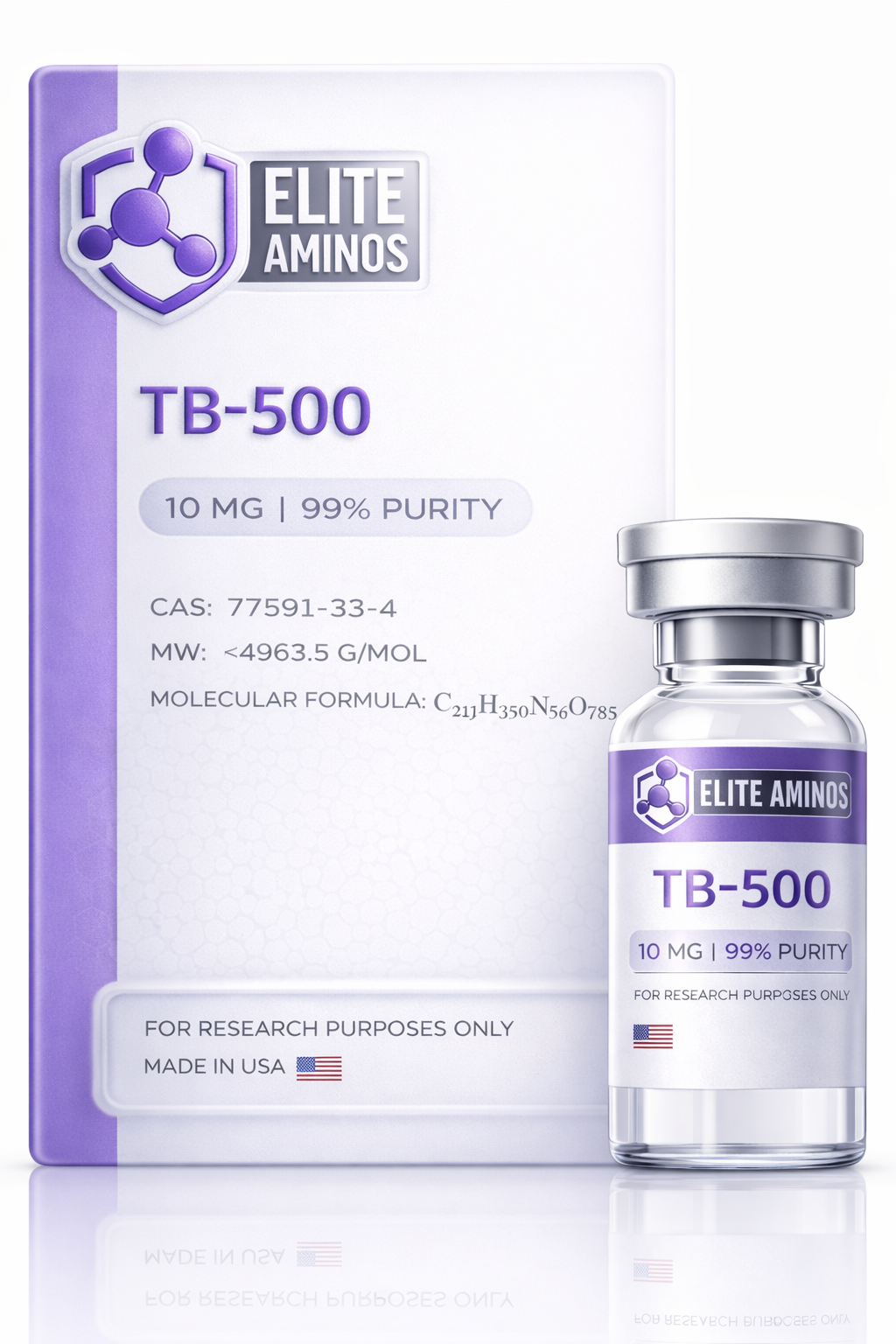
TB-500 10mg is a synthetic research peptide designed to mimic Thymosin Beta-4, a naturally occurring protein encoded by the TMSB4X gene. Composed of 43 amino acids, TB-500 is supplied as a lyophilized powder with a reported purity greater than 99% and is intended strictly for laboratory research use. TB-500 10mg is studied in preclinical models for its involvement in cellular migration, cytoskeletal regulation, angiogenesis-related signaling, and tissue repair pathways.
TB-500 10mg is the laboratory-produced form of Thymosin Beta-4, a protein found naturally in high concentrations within blood platelets and wound fluid. In research settings, TB-500 is used to allow controlled investigation into the biological roles attributed to Thymosin Beta-4, including cellular movement, tissue organization, and regenerative signaling observed in experimental systems.
TB-500 10mg is an experimental research peptide and is not approved for human or animal use.
Thymosin Beta-4 has been widely studied in laboratory and animal models for its role in cellular repair and regeneration. TB-500 has been examined as a research analog to explore similar biological pathways under controlled experimental conditions.
Preclinical research involving TB-500 has focused on its potential involvement in:
Cellular migration and motility models
Cytoskeletal dynamics and actin regulation
Angiogenesis-associated signaling pathways
Tissue organization and remodeling research
These findings remain preclinical and have not been validated in human clinical trials.
TB-500 contains the peptide segment LKKTETQ, identified as a potential actin-binding region. Research suggests this interaction may influence cytoskeletal structure by binding to globular actin (G-actin), a process relevant to cell movement and tissue organization studies.
Experimental models propose that TB-500 may increase the intracellular pool of G-actin by inhibiting the polymerization of filamentous actin (F-actin), which could affect cellular motility and remodeling pathways.
TB-500 has been investigated for its possible role in biological processes associated with new blood vessel formation, a pathway of interest in wound healing and tissue regeneration research.
Studies have detected Thymosin Beta-4 both inside cells and in plasma. Research involving TB-500 has explored whether it may influence cellular energy regulation and motility through interactions with ATP synthase–related enzymes at the cell surface.
All mechanisms described are experimental observations only and do not imply therapeutic benefit.
Product Name: TB-500 10mg
Form: Lyophilized powder
Purity: Greater than 99%
Amino Acid Length: 43 residues
Molecular Formula: C220H350N56O78S
Molecular Weight: Approximately 4,925 g/mol
Alternate Names: Thymosin Beta-4, Tβ4
TB-500 10mg may be utilized by qualified researchers in laboratory investigations involving:
Cytoskeletal and actin-binding studies
Cellular migration and motility research
Angiogenesis and tissue organization models
Regenerative biology and repair signaling pathways
All use must remain within controlled laboratory environments.
For research use only
Not approved by the Food and Drug Administration
Not intended for human or veterinary use
Not intended to diagnose, treat, cure, or prevent any disease
No established clinical safety, dosing, or efficacy data
| Weight | 0.25 lbs |
|---|---|
| Dimensions | 2.75 × 1.25 × 2.75 in |