
By using this website, you confirm you are 21+ and that all products are for research or laboratory use only—not for human or medical use. You take full responsibility for how you handle and store anything you buy, and the company is not liable for any misuse. If you don’t meet these conditions, you must leave the site.
Your access is restricted because of your age.
$49.00
$45.00
$35.00
1000 in stock
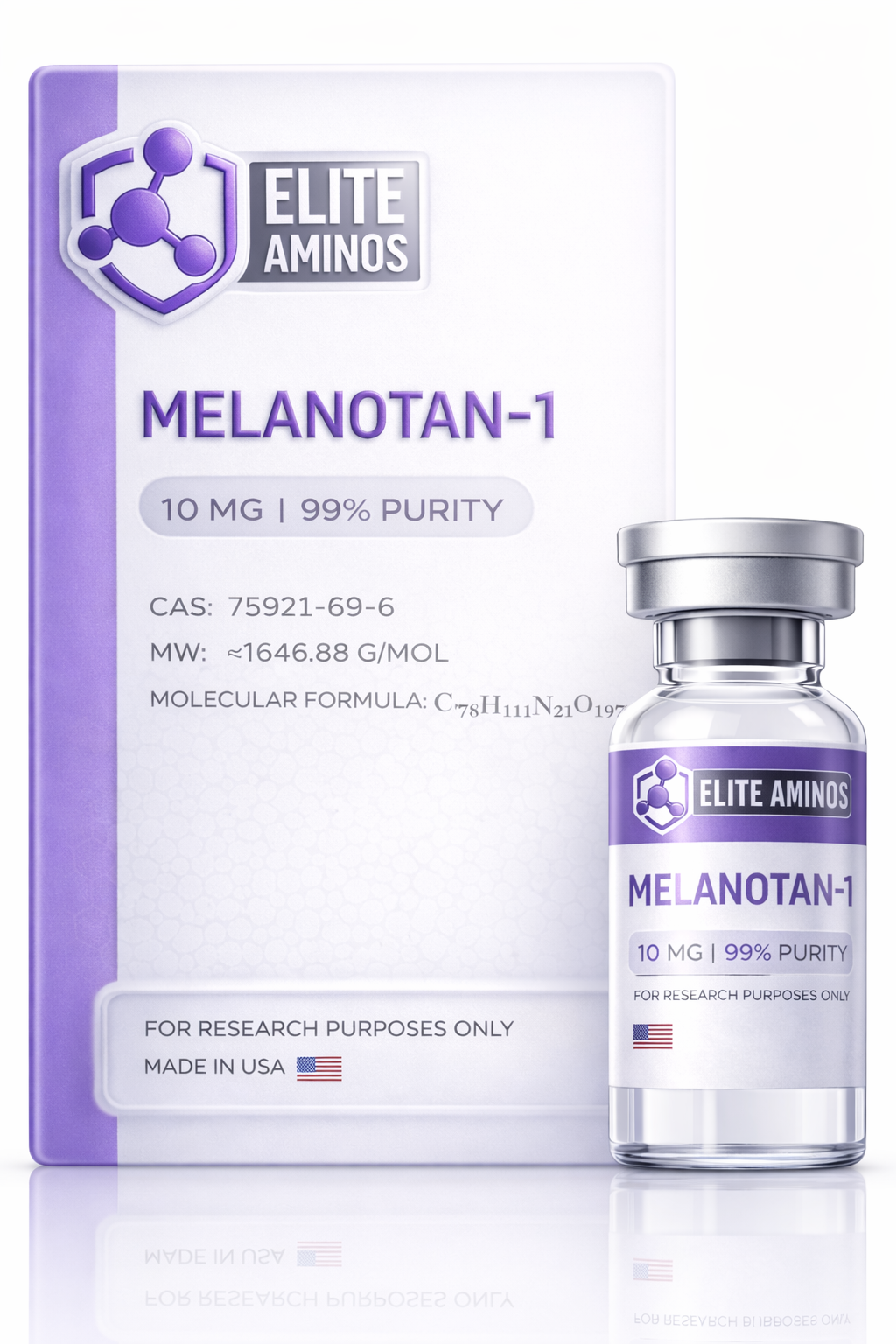
Melanotan 1 10mg is a synthetic research peptide and analog of alpha-melanocyte–stimulating hormone (alpha-melanocyte stimulating hormone). It consists of 13 amino acids, matching the length of the endogenous hormone, with two specific amino acid substitutions designed to improve molecular stability and receptor interaction. Melanotan 1 10mg is supplied as a lyophilized powder with a reported purity greater than 99% and is intended exclusively for laboratory research use.
Melanotan 1, also known as MT1 or Afamelanotide, is a synthetic peptide engineered to mimic the biological activity of alpha-melanocyte–stimulating hormone while offering enhanced stability. The peptide differs from the native hormone by the substitution of norleucine and D-phenylalanine at the fourth and seventh positions, respectively. These structural changes have been studied for their potential to increase receptor affinity and extend peptide half-life in experimental settings.
Melanotan 1 10mg is classified as an experimental research peptide and is not approved for human or animal use.
Alpha-melanocyte–stimulating hormone plays a role in regulating pigmentation through its interaction with melanocortin receptors, particularly melanocortin 1 receptor (MC1R). Research into Melanotan 1 10mg focuses on its ability to activate these receptors and influence melanin-related signaling pathways.
Eumelanin, the pigment associated with darker pigmentation, has been studied for its potential role in protecting tissues from ultraviolet-associated cellular stress. Melanotan 1 has been investigated in laboratory and animal studies for its ability to promote pathways associated with eumelanin synthesis. These findings remain preclinical and have not been confirmed in human clinical trials.
Melanotan 1 10mg has been studied for its preferential binding to melanocortin 1 receptors, which are involved in regulating melanin production within melanocytes.
Activation of melanocortin 1 receptors may initiate cyclic adenosine monophosphate signaling cascades, leading to downstream activation of transcription factors associated with melanin synthesis, including microphthalmia transcription factor.
Laboratory research has explored whether increased signaling through these pathways may shift melanin synthesis toward eumelanin rather than pheomelanin, a distinction of interest in pigmentation and photobiology research.
Increased eumelanin levels have been examined in research models for their potential role in mitigating ultraviolet-related cellular stress and oxidative processes. These effects are theoretical and based on experimental observations only.
Product Name: Melanotan 1 10mg
Form: Lyophilized powder
Purity: Greater than 99%
Molecular Formula: C78H111N21O19
Molecular Weight: 1646.87 g/mol
Alternate Names: MT1, Afamelanotide
Melanotan 1 10mg may be used by qualified researchers in laboratory investigations involving:
Melanocortin receptor signaling
Pigmentation pathway analysis
Melanin synthesis research
Photobiology and oxidative stress models
All applications must be conducted in controlled research environments by trained professionals.
For research use only
Not approved by the Food and Drug Administration
Not intended for human or veterinary use
Not intended to diagnose, treat, cure, or prevent any disease
No established clinical safety, dosing, or efficacy data
| Weight | 0.25 lbs |
|---|---|
| Dimensions | 2.75 × 1.25 × 2.75 in |