
By using this website, you confirm you are 21+ and that all products are for research or laboratory use only—not for human or medical use. You take full responsibility for how you handle and store anything you buy, and the company is not liable for any misuse. If you don’t meet these conditions, you must leave the site.
Your access is restricted because of your age.
$95.00
$68.00
$45.00
1000 in stock
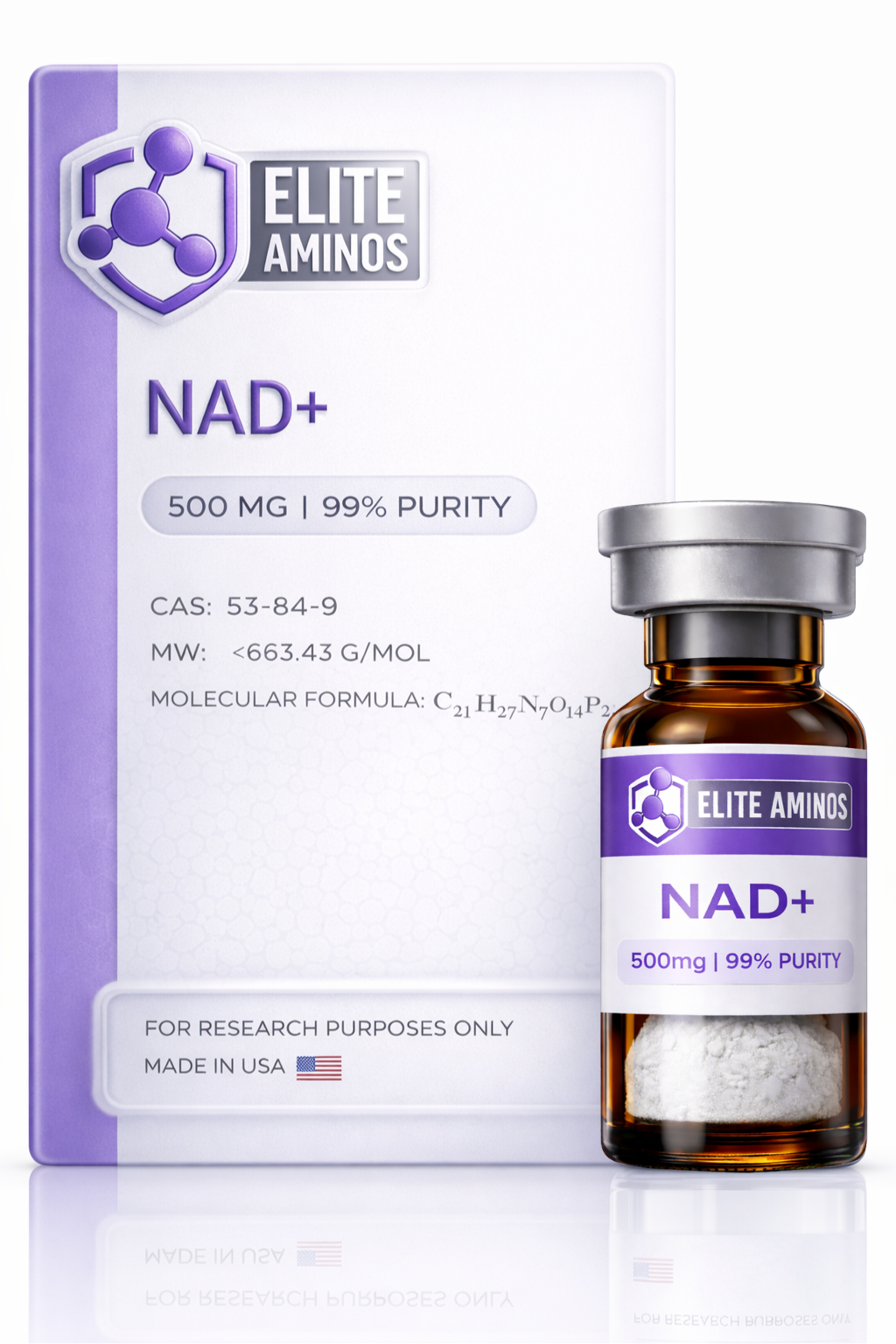
NAD+ (Nicotinamide Adenine Dinucleotide) is an endogenous nucleotide that plays a central role in cellular metabolism, energy production, and DNA repair. Beyond its coenzyme functions, NAD+ has also been studied as a secondary messenger in calcium-dependent signaling and as a potential immunoregulatory molecule.
NAD+ is synthesized naturally in cells through pathways involving tryptophan, nicotinamide, nicotinic acid, nicotinamide riboside, and nicotinamide mononucleotide. These precursors contribute to the de novo and salvage pathways that maintain NAD+ levels. Research indicates that NAD+ participates in over 500 enzymatic reactions, supporting its essential role in energy metabolism and cellular function.
| Weight | 0.25 lbs |
|---|---|
| Dimensions | 2.75 × 1.25 × 2.75 in |