
By using this website, you confirm you are 21+ and that all products are for research or laboratory use only—not for human or medical use. You take full responsibility for how you handle and store anything you buy, and the company is not liable for any misuse. If you don’t meet these conditions, you must leave the site.
Your access is restricted because of your age.
$52.00
$49.00
$23.00
1000 in stock
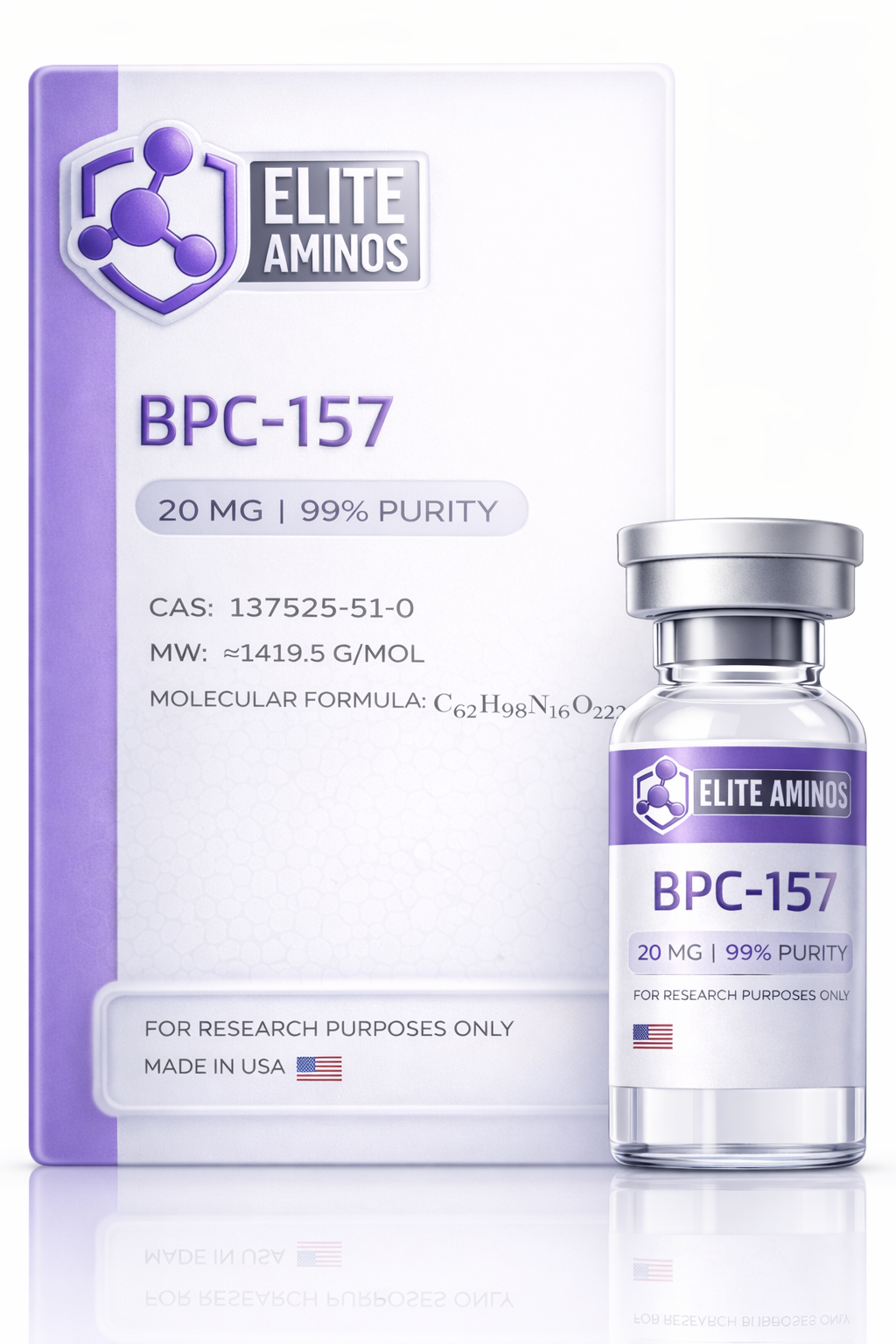
BPC-157 10mg is a synthetic pentadecapeptide composed of 15 amino acids and supplied as a high-purity lyophilized powder. Also known as Body Protection Compound 157, BPC-157 was originally isolated from gastric juice and has since been widely investigated in preclinical research models for its involvement in tissue signaling, cellular repair pathways, and gastrointestinal research applications. BPC-157 10mg is intended exclusively for laboratory research use.
BPC-157 10mg is a laboratory-synthesized version of a naturally occurring peptide fragment associated with protective biological processes in experimental settings. Research interest in BPC-157 centers on its stability, broad tissue interaction profile, and involvement in multiple signaling pathways observed in non-human and in vitro studies.
This compound is not approved for human or animal use and remains an experimental research peptide.
BPC-157 has been extensively studied in animal and cellular research models related to:
Wound healing signaling pathways
Connective tissue and musculoskeletal research
Cellular proliferation and collagen-associated processes
Vascular response and angiogenesis markers
Some studies suggest BPC-157 may interact with growth hormone receptor–related pathways, potentially influencing fibroblast activity and extracellular matrix signaling. These findings are limited to preclinical research and have not been confirmed in human clinical trials.
BPC-157 10mg has been examined in research models involving tendons, ligaments, muscle tissue, bone interfaces, and nerve-associated structures, with attention given to cellular regeneration markers and structural recovery signaling.
Experimental data has explored whether BPC-157 may influence markers associated with new blood vessel formation, a process relevant to wound healing and tissue repair studies.
BPC-157 was originally identified in gastric environments and has been investigated for its potential role in gastrointestinal mucosal integrity, blood flow regulation, and protective signaling in ulcer and injury models.
Research has examined BPC-157 for its interaction with inflammatory signaling cascades, particularly in studies observing functional recovery following experimentally induced tissue stress.
All mechanisms described are research observations only and do not imply therapeutic benefit.
Product Name: BPC-157 10mg
Form: Lyophilized powder
Purity: Greater than 99%
Peptide Length: 15 amino acids (pentadecapeptide)
Alternate Names: Pentadecapeptide BPC 157, Body Protection Compound 157
BPC-157 10mg may be utilized by qualified researchers in laboratory investigations involving:
Tissue regeneration signaling studies
Angiogenesis and vascular response research
Gastrointestinal biology models
Inflammation and cellular repair pathway analysis
All use must remain within controlled laboratory environments.
For research use only
Not approved by the Food and Drug Administration
Not intended for human or veterinary use
Not intended to diagnose, treat, cure, or prevent any disease
No established clinical safety, dosing, or efficacy data
| Weight | 0.25 lbs |
|---|---|
| Dimensions | 2.75 × 1.25 × 2.75 in |