
By using this website, you confirm you are 21+ and that all products are for research or laboratory use only—not for human or medical use. You take full responsibility for how you handle and store anything you buy, and the company is not liable for any misuse. If you don’t meet these conditions, you must leave the site.
Your access is restricted because of your age.
$21.00
$45.00
$28.00
1000 in stock
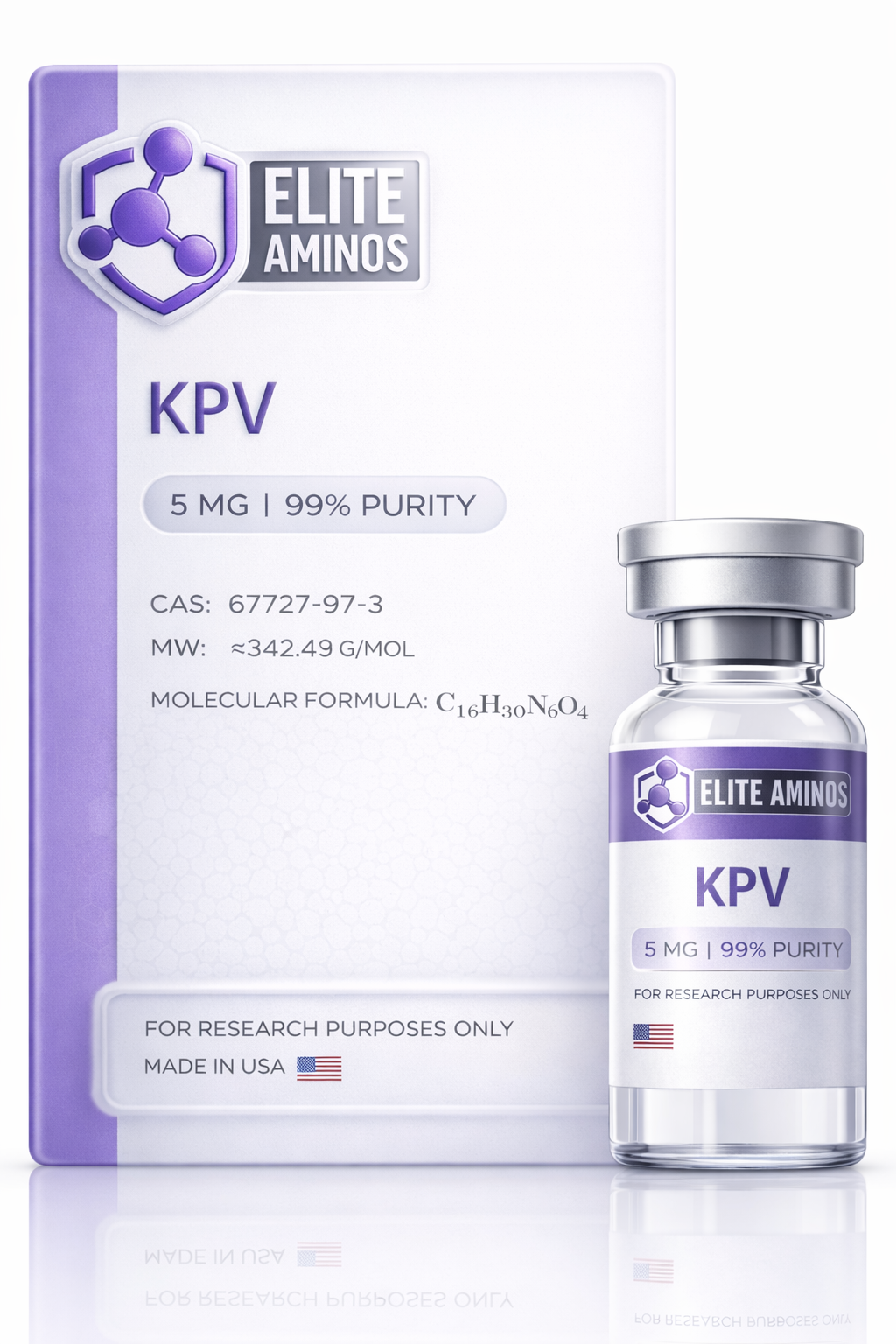
KPV 5mg is a synthetic tripeptide research compound composed of lysine–proline–valine, representing the C-terminal fragment of alpha-melanocyte–stimulating hormone (alpha-melanocyte stimulating hormone). This fragment, commonly referred to as KPV peptide, has been studied in laboratory and preclinical settings for its potential involvement in inflammatory signaling pathways, immune modulation, and gastrointestinal-related research models. KPV 5mg is supplied as a lyophilized powder with a reported purity greater than 99% and is intended exclusively for laboratory research use.
KPV 5mg is derived from amino acids 11–13 of alpha-melanocyte–stimulating hormone, a naturally occurring peptide involved in multiple biological processes. Researchers identified that this short fragment retains many of the signaling properties of the full-length hormone without engaging all melanocortin receptor pathways. As a result, KPV has been investigated as a focused research tool for studying inflammatory and immune-related signaling mechanisms.
KPV 5mg is an experimental research peptide and is not approved for human or animal use.
KPV was first described in scientific literature in 1989 as the key messenger sequence of alpha-melanocyte–stimulating hormone. Early experimental studies examined its role in regulating vascular permeability and localized swelling. Subsequent research expanded interest in KPV due to observations suggesting involvement in immune regulation and inflammatory pathway modulation.
Preclinical and animal studies have explored KPV in models related to gastrointestinal inflammation, immune cell signaling, and tissue response to inflammatory stress. All findings remain preclinical and have not been validated in human clinical trials.
KPV 5mg has been studied for its potential ability to influence inflammatory signaling cascades, including downregulation of pro-inflammatory cytokine expression in experimental models.
Research suggests KPV may interact with immune cells to help regulate excessive inflammatory responses, making it a compound of interest in immune balance research.
Murine studies have examined KPV for its potential role in reducing inflammatory cell infiltration and supporting intestinal function in experimental models of bowel-related dysfunction.
KPV has been investigated for its involvement in controlling localized swelling and vascular permeability, particularly in inflammation-focused research settings.
All mechanisms described are experimental observations or theoretical models and do not imply clinical or therapeutic benefit.
Product Name: KPV 5mg
Form: Lyophilized powder
Purity: Greater than 99%
Peptide Length: 3 amino acids (tripeptide)
Amino Acid Sequence: Lysine–Proline–Valine
Molecular Formula: C16H30N4O4
Molecular Weight: 342.43 g/mol
Alternate Names: MSH (11–13), ACTH (11–13), alpha-melanocyte stimulating hormone (11–13)
KPV 5mg may be utilized by qualified researchers in laboratory investigations involving:
Inflammatory signaling pathway research
Immune modulation and cytokine studies
Gastrointestinal and intestinal inflammation models
Tissue protection and vascular response research
All use must remain within controlled laboratory environments.
For research use only
Not approved by the Food and Drug Administration
Not intended for human or veterinary use
Not intended to diagnose, treat, cure, or prevent any disease
No established clinical safety, dosing, or efficacy data
| Weight | 0.25 lbs |
|---|---|
| Dimensions | 2.75 × 1.25 × 2.75 in |